paula’s story
Formula vs. breast milk, the ongoing debate in the lactation world, continuously labelling mothers into two categories. Personally, I never fed my children formula. Some may say it's because I drank the breast is best Kool-Aid or because I wasn’t presented with a situation in which I needed to. But I cannot imagine a world where I would put my sanity and body in peril while pursuing breastfeeding. For some, formula feeding is a choice and not a consequence of the inability to breastfeed, and in my opinion, that is utterly acceptable. Is it a generational shift? Perhaps, as we have more scientific knowledge that benefits breastmilk today. Most of my friends were exclusively formula-fed, including myself, and we turned out just fine. There is this apparent stigma against formula from the healthcare world that is supposed to support mothers and give them all the information they need to decide. Instead, some of us feel like failures in giving formula, like we are feeding our children processed foods and guilty for not being able to provide them with the liquid gold they deserve. Are we misconceiving the information, or is the info entirely one-sided?
Joined by Rosanna, who shares her story about how she was forced to feed her baby formula, we cannot help but feel with her the emotions she clearly still carries with her today of guilt, pressure and helplessness.
rosanna’s story
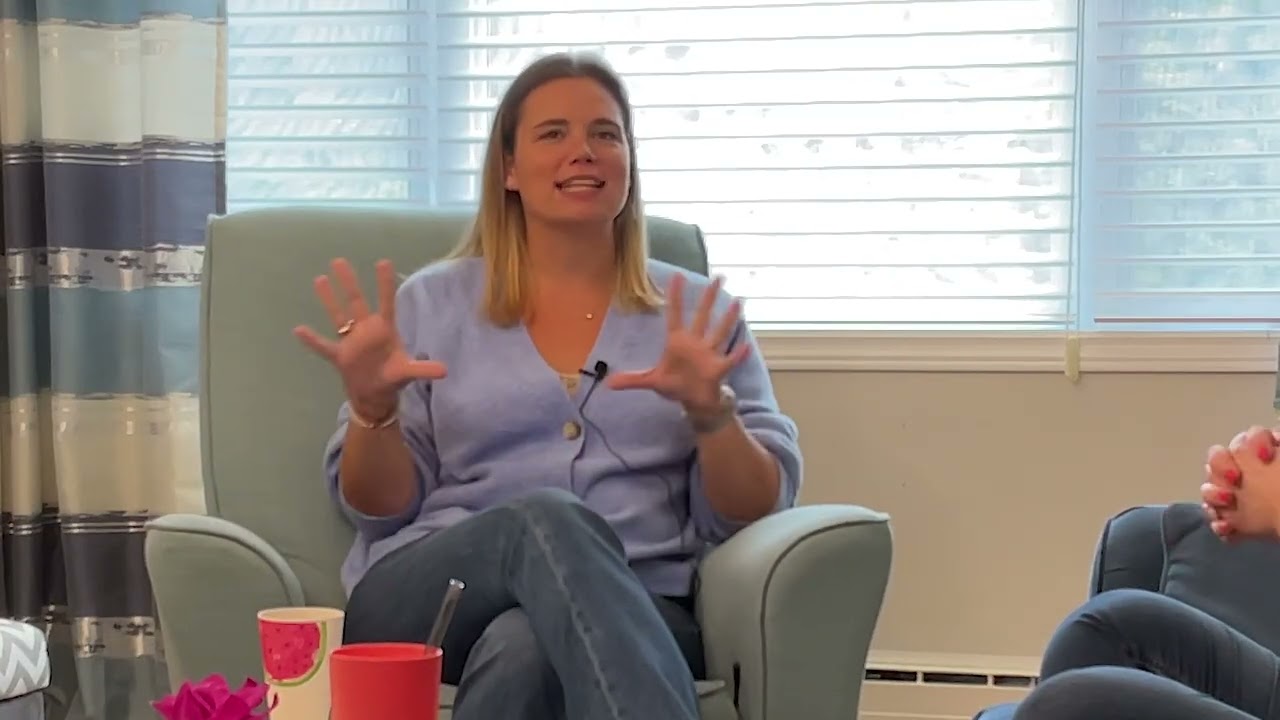
Sitting by herself on my white couch, I can sense that this topic is close to her heart. She starts by explaining how even before her baby was even born, she felt brainwashed by the notion of breastfeeding and how breast is always best, not only by the healthcare system but also by family members. Before getting the chance to experience breastfeeding, she decided she would persevere and do whatever it took to follow the advice that was given to her, and she did just that.
“i was brainwashed with no formula, formula is poisin…”
As soon as Rosanna gives birth to her baby girl, the doctors rush the little one out of the delivery room and tell her that the baby’s sugar levels are too low and that they must give her formula right away. Since it is a question of survival, Rosanna agrees but instantly feels panic, anxiety and distress, thinking that the first thing in her child’s mouth cannot be formula after everything she heard and was taught. Soon after, if that wasn’t bad enough, Rosanna’s daughter started losing weight, and she was being pressured to breastfeed as much as possible and push through to feed, feed, feed.
Once again, she is being told that if she needs to supplement with formula, they will give it to her since they didn’t want to let her go home with a baby who wasn’t drinking enough milk.
Finally, they bring their little bundle of joy home, and Rosanna attempts to breastfeed. However, it looks like her milk has not come in yet because her daughter is latched and sucking, but nothing is coming out. At this point, despair hits them both as her daughter is starving, and Rosanna feels so guilty of being incapable of feeding her child.
After crying all night, Rosanna finally decides to send her fiancee to Walmart to get some formula so her daughter could eat.
”it killed me; IT took everything inside me to give her the formula…”
As Rosanna relives this story, her eyes fill with tears, and her voice gets shaky. Evidently, the overwhelming guilt she felt at that moment still cuts deep to this day. When her fiancee returns from the store, formula in hand, they put it in a bottle, give it to her, and she eats. I could hear the relief in her voice.
Finally, her milk decides to come in, and she can do what she has been trying to do this whole time: breastfeed. A few weeks go by, and she has an appointment with a healthcare professional who notices her daughter is still losing weight. And here we go again…what do they tell her? That’s right! Supplement with formula.
Rosanna doesn’t give up and decides to persevere to breastfeed her child. She succeeds and continues to do so for some time until she realizes that her baby is getting very bad eczema-like skin patches and experiencing a lot of reflux. She takes her to her pediatrician, where the words she never wanted to hear are voiced again: “She is only gaining 9g a day when she is supposed to be gaining over 20g.” Her heart sinks. She cannot believe that this is happening to her all over again. This time, supplement is not a solution the doctor suggests, but asks Rosanna to start changing her diet. Listening to the doctor’s advice, she starts eliminating dairy, nuts, and eggs to the point that she craves food and feels hungry but guilty when she eats something and her daughter reacts.
At this point, Rosanna’s sister and fiancee tell her that it may be time to consider…Formula, and so she did. At the next pediatrician appointment, the doctor noticed that her daughter was gaining weight again, and Rosanna confessed that she had switched to formula. Reassuring her, the pediatrician was happy to see Rosanna's decision to protect her daughter.
“she told me: you did the right thing”
Rosanna finishes by sharing what an emotional whirlwind it was to switch to formula because of the pressures she felt she was under during pregnancy. I asked her if mothers were given the choice of breast and formula like we are chicken or beef, does she think she would have had such a hard time accepting formula in her life. The obvious answer is no. The only thing she does feel like she missed out on is the bond of breastfeeding with her daughter, but I’m pretty confident she would give that up over a hungry baby any day.