paula’s story
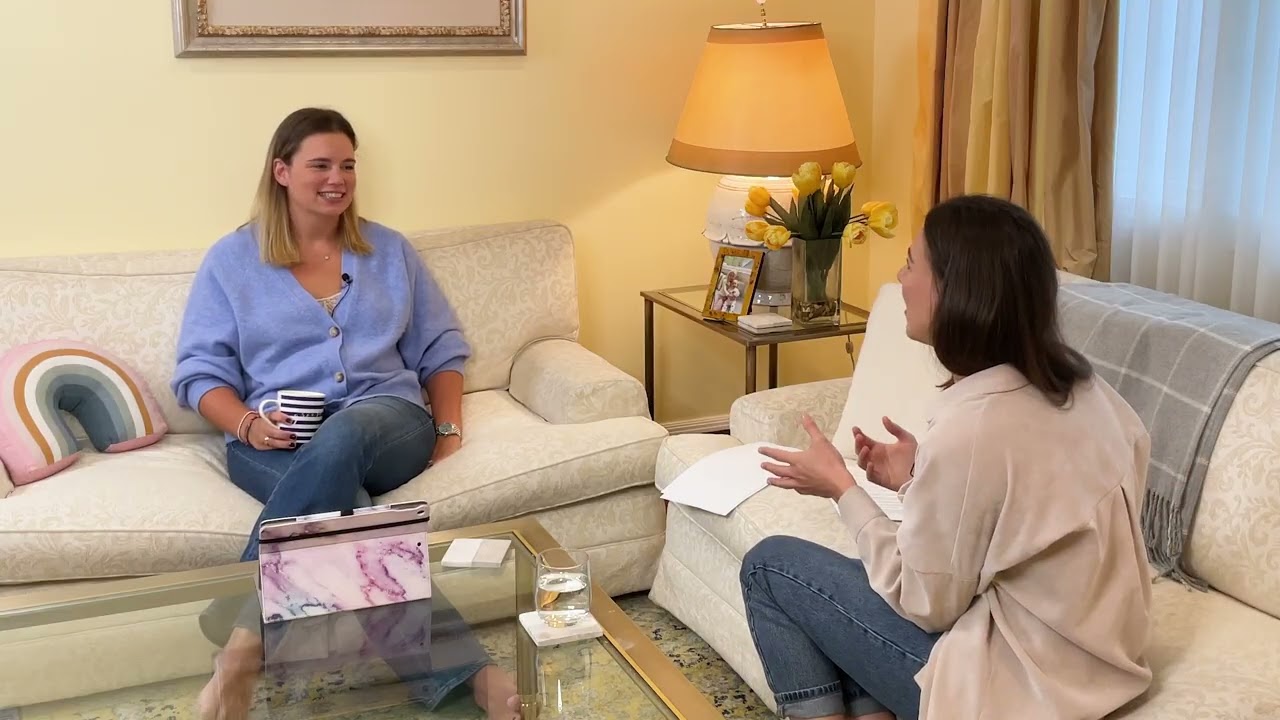
Uffa! That’s all I have to say about that. This topic is a big one for me and not only for me but for our generation as a whole. Since we are discussing understanding gentle parenting, I don't want to dive into how we apply it in our homes yet. I want to discuss how this movement makes us feel as mothers, especially new mothers.
I don't have to tell you that this philosophy gets a lot of attention; it's all over social media, child psychologists are writing books and recording podcasts about it, and the parenting world is leaning on gentle parenting as the best way to raise our children. Question: Has anyone ever really explained it before giving advice? Where it came from, and what it entails exactly. I hear moms and professionals on social media telling me what I should and shouldn't be doing, which gives me a hell of a lot of anxiety, quite frankly. So let’s take a quick moment to find out where gentle parenting comes from and the four notions behind it.
In the 1920s, Dr. Alfred Adler introduced the concept of teaching children through respect and empathy but emphasized the need not to spoil them.
In the 1940s and 1950s, Dr. Magda Gerber advocated for the respectful treatment of infants and children.
In the 1980s, Dr. Jane Nelson introduced the now well-known and well-studied Positive Parenting and then Sarah Ockwell-Smith popularized the term Gentle Parenting.
If I do my math right, Gentle Parenting has existed for over a century! Yet, it’s just lately that people are shoving it down my throat. There could be many reasons for that; maybe our generation is choosing to listen, and perhaps the message is easier to get across with all these different media outlets. All I’m saying is that I appreciate the knowledge and the evolution that parenting is undergoing. What I don’t appreciate is how it’s being told to me, as it feels that if I don’t practice Gentle Parenting, I’m a terrible mom. Is that a ME problem?
So, what is Gentle Parenting actually based on? It’s not permissive parenting, and it's not authoritarian or uninvolved parenting. The four pillars of Gentle Parenting are mutual respect, empathy, understanding and healthy boundaries. Excellent, more terms I didn’t know! I thought we just had kids, did our best and moved on. Apparently, there is homework for becoming a parent!
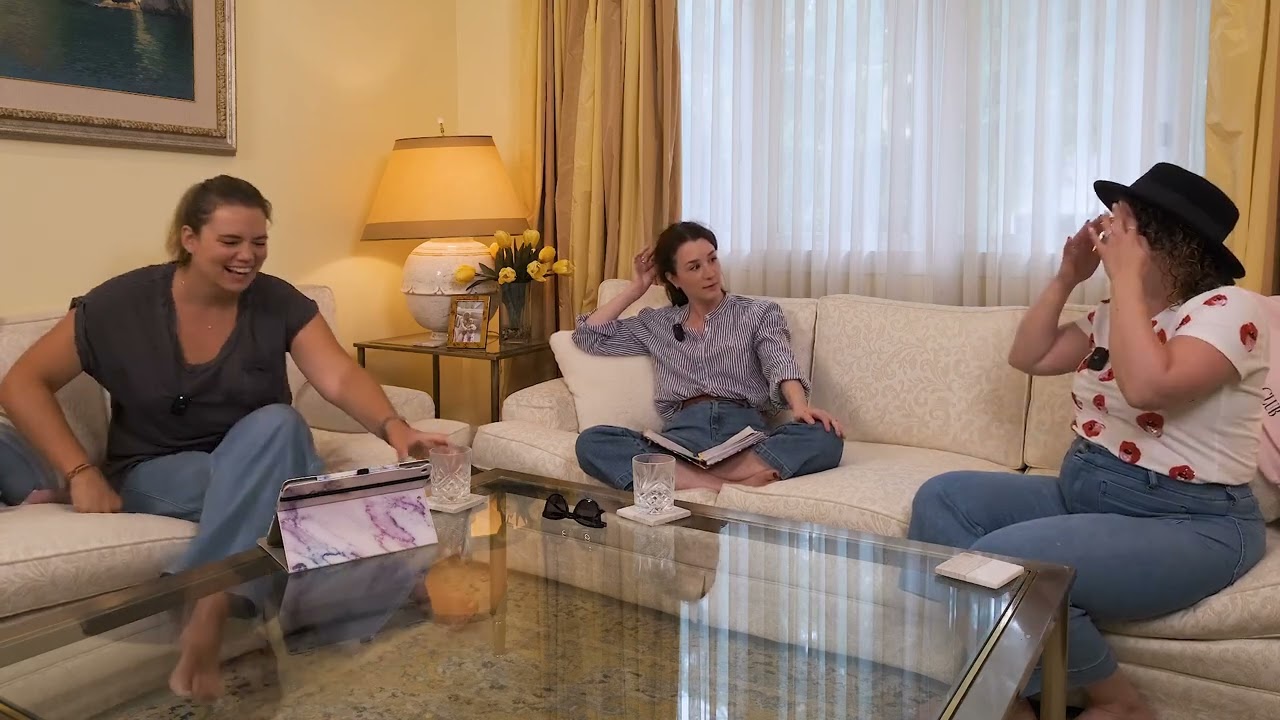
Joined by Alix and Vanessa, we share how this philosophy, movement or parenting style impacts our mental well-being and how we each understand it differently.
alix’s story
Alix begins the conversation by admitting that she is not a person who can subscribe to one philosophy. As she understands it, Gentle Parenting is an umbrella that encompasses many different values, and, as opposed to myself, Alix explains that she feels empowered by the ideology. The fact that there is a consideration for empathy towards children, she says, is lovely and different from how she was parented. She feels grateful for Gentle Parenting and the knowledge it brings her, teaching her how to parent differently than how we were parented. This leads her to believe that she is a better parent and person despite how she was parented. However, there is a caveat. Alix still agrees that the absolute hardest part of Gentle Parenting is learning how to rewire her brain during a challenging moment that may be triggering.
when i became a parent, ok, whining is bad but…WHY?
The more Alix educated herself, the more she asked herself questions like “Why is whining bad?” Gentle Parenting would suggest that whining is a child in distress and doesn’t know how to regulate their emotions, so why would she yell at them? Mind Blown! Who knows what kind of person she would have become if her parents had known that when she was growing up? Like many of us, she grew up thinking perfection was attainable, and for her kids to attain perfection, she had to parent by example. Quickly, she realized nobody is perfect; everyone is learning, and styles vary from child to child as she is on her personal growth journey as a mother. In her continued journey with her three children, Alix finishes by sharing that she is a big believer in specialists and that she has a specialist for everything because, as opposed to books or social media, specialists are human and grow with you and have their own experiences in addition to their expertise. Alix believes in Gentle Parenting but also believes in human behaviour and that just because you try to be a gentle parent doesn’t mean you can’t lose your shit sometimes too.
vanessa’s story
Vanessa brings up an excellent point right off the bat when she says that Gentle Parenting doesn’t mean that you parent like a robot and hide all emotions, and if you think that’s what Gentle Parenting is, then it’s a misuse of the language. In Vanessa’s opinion, children should also see what human emotion looks like; getting angry is one of those emotions. She explains that when she had her firstborn, Emma, her parenting instincts didn’t quite kick in, and she used books as a crutch to educate herself, which provided her with some self-confidence.
“the books, the podcasts, the social media GURUS, at times have been really helpful…”
Vanessa views all this knowledge as a double-edged sword. On one side, she is grateful for the education and philosophies she aspires to implement in her own home. On the flip side, when she feels like she is running off script from the philosophy or what she has learnt, she can quickly become guilt-ridden. That guilt is something that Vanessa remembers quite vividly due to the lack of connection she experienced with Emma. She felt that there was something that she was or wasn’t doing as they were escalating each other instead of connecting with one another. That’s where the books and the knowledge helped her build that bond with Emma she had always envisioned. A little teary-eyed, Vanessa shares that she wonders if she was too late to implement those learnings with Emma, as she was already three years old at the time and if she has done irreparable damage to their relationship. Obviously, the answer is no. She reassures herself by saying that she feels it’s never too late to repair and that parenting is not only about your child's growth but also about your personal growth.
“gentle parenting has provided me with an opportunity for that growth, but with that comes some of the guilt…”
Our parents came from a more authoritarian perspective on parenting. They didn’t really question or feel self-conscious about how they parented like our generation does today, making them more secure and less anxious. They just copied what their parents did to them and hoped for the best, precisely where lies our hurtle. Interestingly, Vanessa proves that even if you come from “gentle parents,” you don’t necessarily know how to practice Gentle Parenting innately. She believes that if she were a product of authoritarian parenting, she would have known what not to do. However, being a product of gentle parents, to begin with, it’s a little more tricky because that’s just how her parents parented her intuitively, and the not-to-do’s were not as clear.
Similarly to myself, Vanessa shares with me the mental pressure of “damaging” our children if we don’t abide by Gentle Parenting rules. We are slowly hurting them emotionally, or there will be some consequence in the long run as the stakes of raising children are so high.
Vanessa and Alix, being moms longer than me, show me that confidence comes with time and that the parenting style I adopt is mine, just as are my children.